-
The Art of Korean Najeon Chilgi: A Timeless Craft
The Art of Korean Najeon Chilgi: A Timeless Craft 1. The Origins of Korean Najeon Chilgi Najeon Chilgi (Korean mother-of-pearl lacquerware) is a traditional Korean craft that dates back over a thousand years. The technique involves embedding finely cut pieces of mother-of-pearl (nacre) onto wooden objects and coating them with multiple layers of lacquer to…
-

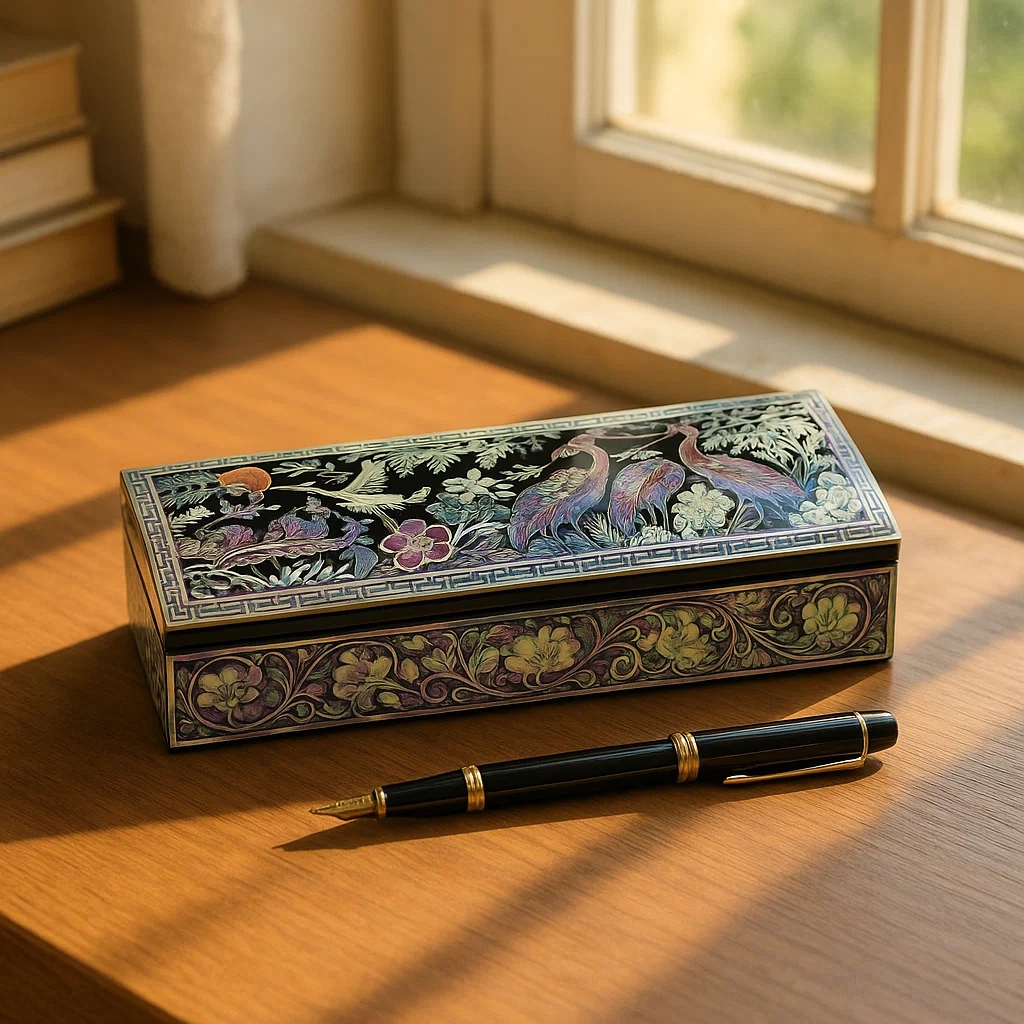
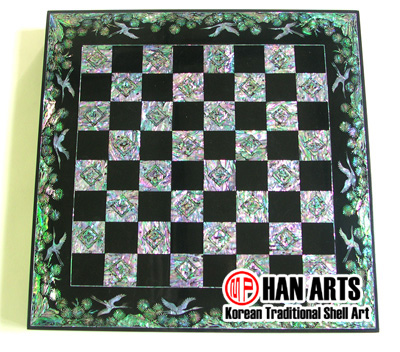
Crane & Pine in Korean Shell Inlay Art – Symbols of Longevity & Resilience
Discover the rich symbolism of crane and pine in Korean mother-of-pearl shell inlay art ; explore handmade pencil cases, jewelry boxes & more. In traditional East Asian art, the crane (鶴, “hak”) and the pine tree (松, “song”) are two of the most revered symbols.When rendered in delicate mother-of-pearl inlay atop a glossy lacquer background,…
-
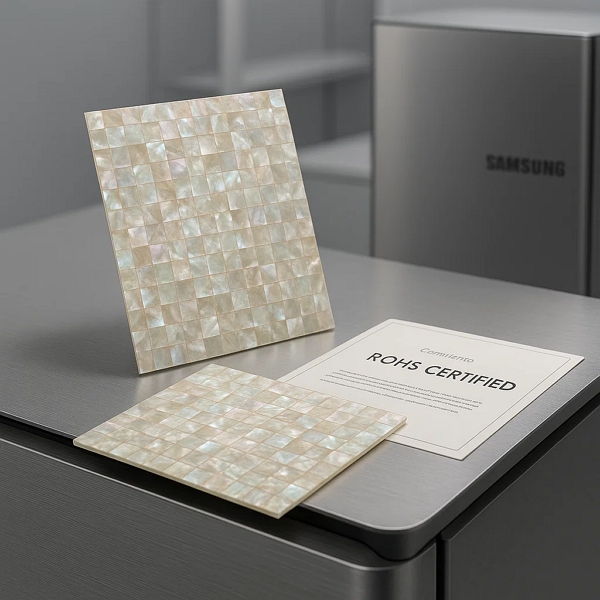
HANARTS’s ROHS Certification: A Global Standard for Mother-of-Pearl Design
HANARTS’s ROHS Certification: A Global Standard for Mother-of-Pearl Design In an era where design meets sustainability, HANARTS has positioned itself as a rare example of traditional craftsmanship evolving into industrial-grade innovation. Back in 2007, the brand accomplished something few in the decorative materials space had done: it achieved ROHS certification to meet the demands of…
-
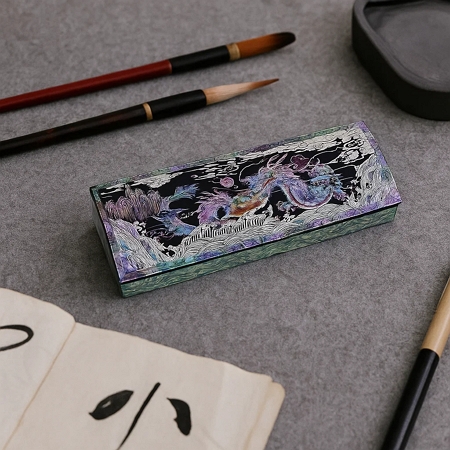
Dragon in Korean Shell Inlay Art – Symbols of Power & Prosperity
Across East Asian art, the dragon (龍, “ryong/hong”) reigns supreme as a guardian of the heavens, a bringer of rain and abundance, and an emblem of imperial authority.In the hands of our master artisans, delicate mother-of-pearl fragments are inlaid into lustrous lacquer to evoke the sinuous curves and iridescent scales of this mythical creature.Introducing the Dragon…
-
Let’s look back at the traditional Korean craft industry.
Let’s look back at the traditional Korean craft industry. In 2006, an article titled ‘Looking back on the traditional craft industry’ was published by the economic magazine ‘Asia Economic Daily – HANARTS’. This is an honest article about what I saw, heard, and felt at the scene. ——————– No matter how much Korean…
-
Restart K-Packet international Post service to World
Restart K-Packet international Post service to World From today, Korea Post’s K-packet international shipping service will resume. Due to the impact of COVID-19, air passenger and air freight services worldwide are still not smooth. HANARTS restarts K-Packet international shipping service for customers who want lower shipping cost. However, due to the impact of COVID-19, the…
-
You can easily make shell tiles.
Standard Shell sheet : 240 x 140 x 0.15 mm (Ex) The shell sheet below is a shell sheet made using New Zealand shells. Design After drawing the design you want on thin paper, attach the above shell sheet with glue. – Glue is easily soluble in water. Usually, when producing for mass…
-
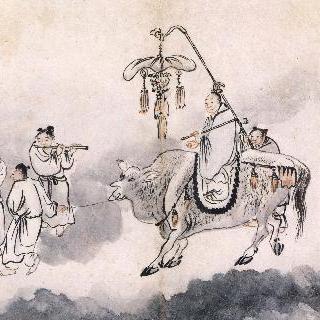
The meaning of traditional Korean paintings
Yeongsuhwa – Paintings depicting imaginary animals that are guardian gods called Yeongsuhwa. Dragon, Haitai, Shingu, and Giraffe are auspicious ordinal numbers, meaning protection and congratulations. Magpie and tiger – Sehwa with auspicious meaning to announce the joy of the new year Tiger Painting – The tiger painting has the meaning of a byeoksa (壁邪) that…
-
The list of simple design meaning
Simple Korean traditional design at a glance List of Korean Traditional design Chrysanthemum – Nobility, nobility, nobleness Butterfly Moon – Lucky image (吉祥), feminine flexibility Maehwamun (梅花紋) – virtue, fidelity, virtuousness Peony Gate (牡丹紋) – King of wealth, sincerity, and white flowers Bat sign – longevity (white-500 years, silver-1000 years), good fortune, and the meaning…